Popcorn, Rupees, and Empty Seats: The Real Story Behind Bollywood's American Box Office Problem
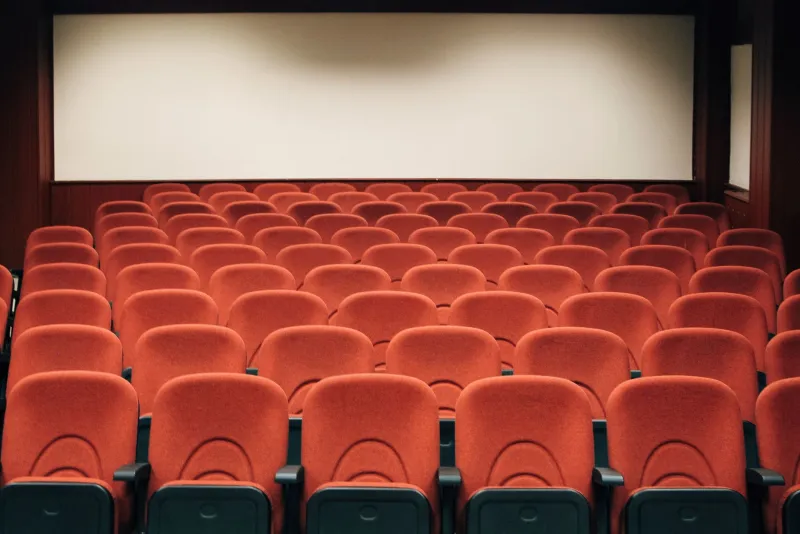
Let's set the scene. A massive Hindi film drops — we're talking a ₹200 crore budget, a superstar lead, wall-to-wall hype on every desi WhatsApp group you're in — and then it opens stateside to, like, three showtimes at a theater 45 minutes from your house. By Sunday, it's gone. Meanwhile, your cousins in Mumbai are sending you clips of packed-out crowds losing their minds.
This is not a new story. But it keeps happening, and it's worth actually unpacking why.
The Distribution Problem Nobody Wants to Talk About
Here's the thing most casual fans don't realize: Bollywood films don't enter the US market through the same pipeline as Hollywood releases. Studios like Yash Raj Films or Dharma Productions typically license North American distribution rights to smaller specialty distributors — companies that don't have the same leverage with theater chains that, say, Disney or Universal does.
What that means in practice is fewer screens, worse showtimes, and almost zero promotional presence inside the theater itself. No standees. No trailers before other movies. No partnership deals with fast food chains. You're not going to see a Brahmastra Happy Meal at McDonald's, and that matters more than it sounds.
When a film only gets 300-400 screens across the entire country compared to a Hollywood tentpole's 4,000-plus, the math just doesn't work — even if every single desi family in America buys a ticket.
Who's Actually Showing Up?
The US desi audience is not a monolith, and that's something distributors frequently get wrong. You've got first-generation immigrants who grew up on 90s Bollywood and will show up for Shah Rukh Khan regardless. You've got second-gen South Asian Americans who are more selective, often preferring films with contemporary themes or crossover buzz. And then you've got a growing non-desi audience that discovered Indian cinema through Netflix or RRR's Oscar campaign.
The problem is that most theatrical marketing strategies target only the first group — the guaranteed base — and completely ignore the other two. Trailers run on Indian TV channels and desi YouTube channels. Promo events happen in New Jersey and Fremont. The outreach stops there.
That's a huge missed opportunity, especially when you look at what actually worked.
The Outliers That Cracked the Code
Pathaan's US run in early 2023 was a genuine moment. Shah Rukh Khan's comeback film pulled in over $10 million domestically, which sounds modest until you realize how many Bollywood films don't even clear a million. The difference? A combination of factors that rarely align: genuine superstar magnetism, a years-long absence that built anticipation, aggressive social media momentum that crossed cultural lines, and a film that was, frankly, a well-made action movie that didn't require any cultural homework to enjoy.
Then there's RRR, which is technically a Telugu film but became the breakout case study everyone references. SS Rajamouli's epic didn't just do well — it sparked legitimate mainstream American enthusiasm. Critics loved it. Non-desi audiences sought it out. It got an Oscar nomination. And a huge part of that success came from a smart re-release strategy by Variance Films, which positioned it as an action spectacle first and an Indian film second. That's not a compromise — that's understanding your audience.
The Gatekeeping Nobody Admits Exists
Here's where it gets uncomfortable. American multiplex chains have historically treated Indian cinema as a niche product, something you accommodate rather than champion. Theater programmers in markets with large desi populations — Houston, the Bay Area, Chicago suburbs — have gotten better about this. But in most of the country, the implicit message is still: this is foreign cinema, here are your limited showtimes, please don't expect us to put effort in.
There's also a subtler issue around how these films are categorized and shelved in the cultural imagination. A French art house film gets reviewed in the New York Times. A major Bollywood release with a $30 million budget might get a paragraph, if that. That critical silence shapes whether non-desi audiences ever consider buying a ticket.
What Actually Needs to Change
The wins — Pathaan, RRR, Baahubali 2 back in 2017 — all share a few things. They're spectacles that translate visually. They have marketing that reaches beyond the diaspora bubble. And crucially, they were positioned as events, not just movies.
For Bollywood to consistently crack the US market, the industry needs to stop treating North America as a guaranteed diaspora ATM and start treating it as a real theatrical territory. That means earlier, louder English-language marketing campaigns. It means pursuing genuine mainstream press coverage, not just desi media. It means pushing for better screen counts through stronger distribution partnerships.
The audience is there — and it's bigger and more diverse than it's ever been. The infrastructure just hasn't caught up yet. Until it does, a lot of great films are going to keep disappearing from your local multiplex before you even had a chance to see them.