Speak Your Truth: Why Bollywood Stars With Desi Accents Are Winning the Global Streaming Wars
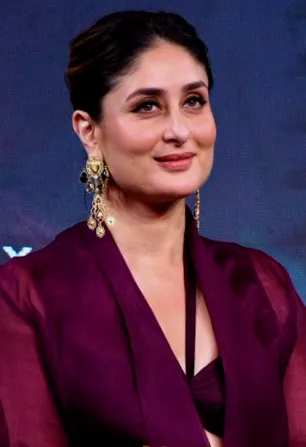
Photo: Bollywood Hungama, CC BY 3.0, via Wikimedia Commons
The Accent Audition Nobody Asked For
Somewhere in the mid-2000s, Bollywood collectively decided that the path to global relevance ran directly through a mid-Atlantic accent coach. Stars started showing up to international press junkets sounding vaguely British. Others adopted a kind of stateless English that belonged to no particular geography. The message was clear, even if it was unspoken: to be taken seriously beyond South Asia, you needed to sand down the parts of yourself that sounded too Indian.
Fast-forward to 2024, and that strategy looks — to put it generously — outdated.
The actors breaking through on global streaming platforms right now are not the ones who spent years in elocution classes. They're the ones who showed up sounding exactly like where they came from. And audiences, including American audiences, are responding in ways that are genuinely reshaping how the industry thinks about marketability.
What the Numbers Are Actually Telling Us
Let's talk about streaming performance for a second, because the data here is more interesting than the discourse.
Series and films featuring Indian talent with distinct regional accents and speech patterns have consistently outperformed expectations on Netflix, Amazon Prime Video, and Disney+ Hotstar's international catalog. Mirzapur — not exactly a show designed with a US audience in mind — built a devoted American fanbase that's loud, engaged, and not watching with subtitles because they're confused. They're watching because the specificity feels real.
Comparatively, productions that leaned heavily into English-language accessibility — films that seemed engineered for Western consumption — often landed with a thud outside of diaspora communities. The crossover that was supposed to happen didn't, and the home audience that was supposed to be a guaranteed base sometimes felt alienated by the artificiality.
Casting directors in Mumbai have quietly started factoring this into decisions. One director, speaking to us without attribution, put it bluntly: "There was a period where we'd almost apologize for how someone sounded in English. Now we're asking whether that authenticity is actually the selling point."
The Diaspora Factor
Here's something the industry underestimated for a long time: the South Asian diaspora in the US is not a monolith, and it doesn't consume Indian content the same way it did twenty years ago.
First-generation immigrants watched Bollywood partly for the escapism, partly for the cultural connection. Their kids — second-generation South Asian Americans who grew up on both Bollywood and American pop culture — have a very different relationship with authenticity. They're not looking for Indian cinema to sound more American. Many of them are actively tired of that performance. They want to see something that reflects the actual texture of South Asian identity, which is layered, code-switching, and entirely comfortable existing in multiple registers at once.
An actor who speaks English with a Mumbai cadence, switches to Hindi mid-sentence, and doesn't treat either mode as an apology is, for a lot of these viewers, aspirational in a way that a perfectly neutral accent simply isn't.
This is not a small market. There are roughly four million Indian Americans in the US, with significant purchasing power and a streaming subscription rate that content platforms track very carefully. When they say they want authenticity, the platforms listen.
The Priyanka Problem (and What It Taught Everyone)
Priyanka Chopra Jonas is a fascinating case study, and not because she did anything wrong — she made calculated bets that made complete sense given the information available at the time. Her push into American network television with Quantico was, on paper, exactly what a global crossover looked like. She modulated her accent, she played a character with no strong Indian identity markers, and she landed a primetime slot on ABC.
But something interesting happened in parallel: her Indian work, and the work of her contemporaries who never chased the same crossover, aged better. Desi Girl remains a cultural touchstone in a way that Alex Parrish from Quantico simply doesn't. The character that sounded most like her resonated longest.
This isn't a critique of her choices — it's an observation about what the market ultimately rewarded. And she's smart enough to have noticed it herself. Her more recent projects have leaned back into her South Asian identity in ways that feel deliberate and commercially savvy.
Authenticity Isn't the Same as Refusing to Grow
It's worth being careful here, because this argument can tip into something unhelpful if it's not handled right. Saying "keep your desi accent" isn't the same as saying "don't develop as an artist" or "don't pursue international work." That's a misreading.
What the data and the cultural moment are actually suggesting is more nuanced: audiences can tell the difference between an actor who is genuinely bilingual and code-switching with confidence, and an actor who is performing a version of themselves they think will be more palatable to Western ears. One reads as compelling. The other reads as insecure, even when the performance itself is technically proficient.
The actors who are thriving globally right now — whether it's the ensemble cast of Sacred Games, the leads of Panchayat, or the breakout stars of Made in Heaven — aren't doing it by sounding less Indian. They're doing it by committing fully to specificity.
So Where Does This Leave the Industry?
Bollywood is at an interesting inflection point. The old model — polish everything, neutralize the rough edges, make it exportable — is losing ground to something messier and more honest. And the irony is that the messier, more honest version is actually traveling further.
For stars who spent real money and real time trying to sound a certain way for international audiences, this probably stings a little. But for the generation coming up right now — the actors who grew up watching both Shah Rukh Khan and The Wire, who exist in multiple cultural spaces without apology — this moment is a genuine opening.
The accent isn't the liability. It never really was. The belief that it was — that's the thing that was holding people back.