Outside Voices: How Bollywood's New Wave of 'Wrong' Accents Is Actually Getting It Right
There's a moment in Vikrant Massey's performance in 12th Fail that a lot of desi viewers in the US described the same way: that's my dad. Not literally, obviously. But there was something in the cadence, the scrape and texture of his Hindi, the way his character moved through the world without the polished confidence of someone who grew up with connections — it felt real in a way that a lot of Bollywood protagonists simply don't.
That feeling has a name, even if nobody in the industry wants to say it out loud. It's the feeling of watching someone who doesn't fit the traditional Bollywood mold — and being surprised by how much more you connect with them because of it.
What the Old Template Looked Like
For decades, the ideal Bollywood lead came with a fairly specific profile. Ideally from a film family, or at minimum from Mumbai or Delhi. Fluent in a certain kind of Hinglish that signals urban sophistication. Conventionally attractive by very particular standards. And speaking a Hindi that, ironically, doesn't sound like how most Hindi speakers in India actually talk.
The accent piece is crucial here. There's a version of Hindi that reads as "correct" on screen — neutralized, clipped, closer to what you'd hear in a newscast than in a UP village or a Bihar household. Actors who came up through the industry learned to sand down their regional edges. The message was clear: where you're actually from is something to erase.
The Shift That's Been Building
Something started cracking open around the mid-2010s, and it's accelerated significantly since. The rise of OTT platforms like Netflix India and Amazon Prime Video created space for stories that weren't designed for the traditional multiplex audience, which meant characters who sounded like the 80% of India that the film industry had been quietly ignoring.
Series like Panchayat and Mirzapur introduced actors and dialects that felt genuinely regional — and they found massive audiences, including among diaspora viewers who recognized the sounds of their parents' hometowns. That success had a ripple effect. Suddenly, casting a Bhojpuri-inflected delivery or a distinctly South Indian cadence in Hindi dialogue wasn't a liability. For certain projects, it became the point.
Regional cinema stars crossing over has pushed this further. Allu Arjun's Hindi dub in Pushpa became a cultural phenomenon partly because of its deliberate roughness. It wasn't trying to sound like a Mumbai film star. That was the whole thing.
Why Purists Are Losing Their Minds
Not everyone is celebrating. There's a vocal contingent of traditional Bollywood observers — critics, industry insiders, and some fans — who view this shift with something between concern and contempt.
The argument, when it's being made politely, goes something like: Bollywood has always been aspirational. Audiences want to see a heightened, glamorous version of life, and that includes how people speak. Diluting that with regional accents or unconventional speech patterns undermines the fantasy.
The less polite version is more revealing: some of the pushback is simply about class and cultural gatekeeping. The "correct" Hindi accent has always been a proxy for a certain kind of social pedigree, and the people who benefited from that system aren't thrilled to see it questioned.
What the Diaspora Actually Wants
Here's what's interesting from a US desi perspective. For a lot of second-generation South Asian Americans, the slick, aspirational version of Bollywood — the Switzerland song sequences, the perfect skin, the accent that sounds like nobody you actually know — has always created a kind of distance. It's beautiful to watch, but it's not yours.
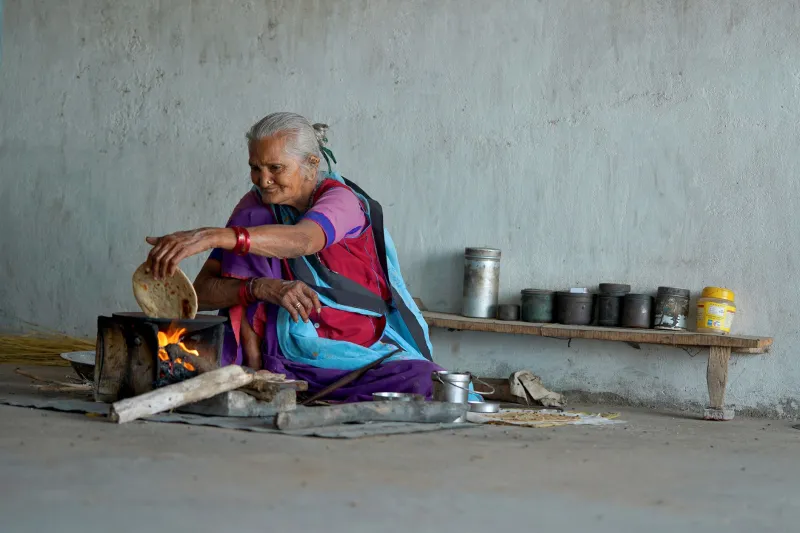
The newer wave of outsider performers often lands differently. When a character sounds like your nani, or carries themselves with the specific kind of dignity that comes from working hard without connections, it hits something that the traditional template never quite reached. That's not nostalgia. That's representation of a different kind — not of what we want to be, but of where we actually came from.
Actors like Pankaj Tripathi, Nawazuddin Siddiqui, and Rasika Dugal have built devoted followings in the diaspora precisely because they brought something the industry's traditional stars couldn't offer: the feeling that the camera was finally pointed at the India that most Indian families in America actually descended from.
The Road Forward
None of this means the traditional Bollywood star is going away. Shah Rukh Khan is still Shah Rukh Khan. But the ecosystem around him is changing, and the audience's appetite for authenticity — messy, regional, unpolished — is real and growing.
The casting revolution isn't just an aesthetic shift. It's a renegotiation of whose stories get told and whose voices get amplified. For desi communities in America who have spent decades watching Bollywood from a slight distance, wondering why the screen version of home never quite looked like home — this moment feels like something worth paying attention to.