The Stans Have Notes: How Gen Z Desis Blew Up Bollywood's Old Critic Establishment

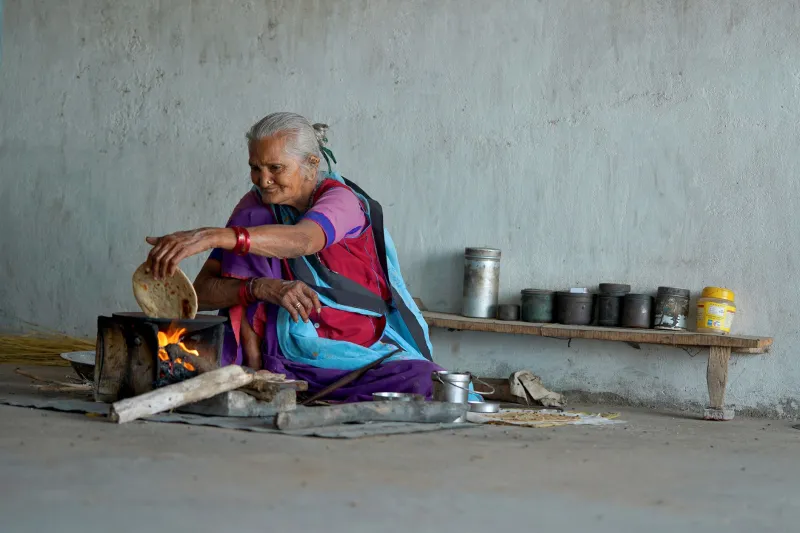
Photo by Photo by Rejaul Karim on Unsplash on Unsplash
Somewhere between a 47-second TikTok stitching a problematic dialogue scene with a deadpan reaction and a 6,000-word Reddit thread dissecting the colorism embedded in a film's casting choices, Bollywood criticism quietly got a complete overhaul. Nobody sent a memo. Nobody held a summit. Gen Z desis just... started talking, and they did not come to be polite about it.
For anyone who grew up consuming Bollywood through the lens of legacy entertainment press — the kind that gave five stars to whatever Shah Rukh Khan sneezed on and treated every big-studio release like a cultural gift — the contrast is genuinely jarring. And honestly? Kind of thrilling.
The Old Guard and Why It Lost the Room
Traditional Bollywood film criticism, both in India and in the diaspora, operated on a set of unspoken rules for a long time. You didn't bite the hand that flew you to the press junket. You didn't write a genuinely scathing review of a star's film if you wanted access to their next one. You softened your language, you contextualized your complaints, and you generally treated the industry with a deference that had more to do with access journalism than actual criticism.
Diaspora entertainment coverage had its own flavor of this — a kind of protective pride that made it hard to be truly critical of Bollywood without feeling like you were somehow betraying the culture. That tension kept a lot of honest takes off the table.
Gen Z desis, particularly those who grew up in the US with one foot in South Asian culture and the other in a broader internet media landscape that has absolutely no chill, did not inherit that anxiety. They watched Bollywood the same way they watched everything else — with a critical eye trained by years of film Twitter discourse, YouTube video essays, and a general cultural expectation that media should be interrogated, not just consumed.
TikTok as Film Criticism: More Serious Than It Sounds
Let's talk about what's actually happening on TikTok, because it's more substantive than the "kids doing dances" framing suggests. There's a whole ecosystem of South Asian creators — many of them second-gen Americans in their late teens and twenties — producing film analysis content that would hold up against anything in a mid-tier film publication.
The format is different, obviously. You've got 60 seconds, maybe 90 if you're ambitious. But the compression forces clarity. You can't hide weak analysis behind flowery prose when you're working against a countdown clock. The best Bollywood TikTok criticism is sharp, specific, and often genuinely funny — which, it turns out, is exactly what film criticism should be.
Viral moments in this space have included multi-part breakdowns of how specific Hindi blockbusters handle female characters in their third acts, side-by-side comparisons of how South Indian films and Bollywood films frame the same kinds of emotional scenes, and some genuinely blistering takes on the gap between a film's stated progressive politics and its actual narrative choices.
These videos get hundreds of thousands of views. The comments sections become their own criticism. It's a living, evolving conversation in a way that a published review never quite is.
Reddit and Discord: Where the Real Deep Dives Live
If TikTok is the quick take, Reddit is where Gen Z desis go to do actual homework. Subreddits dedicated to Bollywood and Indian cinema have seen a generational shift in their most active contributors over the last three or four years. The conversations are longer, more referenced, and considerably less tolerant of stan culture overriding genuine critical engagement.
A well-upvoted post breaking down the narrative logic problems in a major Bollywood release will routinely outperform a hype post celebrating the same film's box office numbers. That's a meaningful cultural signal. The audience showing up for those threads isn't there to be sold to. They're there to think.
Discord servers have added another layer — private, community-moderated spaces where desi film fans with specific interests (South Indian cinema deep cuts, pre-2000 Bollywood, independent Urdu-language film) can have conversations that don't get drowned out by whatever's trending. These spaces are producing genuinely sophisticated film culture, largely invisible to the mainstream industry.
"It's like having a film school study group except everyone has actually seen the movies and nobody's trying to impress a professor," one Discord moderator based in Chicago told us. "We'll spend three hours on a single scene sometimes. The industry has no idea these conversations are happening."
What Gen Z Is Actually Demanding
So what's the substance of the critique coming out of these spaces? A few consistent themes:
Representation that goes beyond tokenism. Gen Z desi audiences have grown up watching American studios get called out for shallow diversity moves, and they apply the same lens to Bollywood. A film that casts a dark-skinned actress but then lights her to look lighter, or gives a queer character a tragic arc while the straight characters get happy endings, is going to get dissected in detail.
Accountability for the remake cycle. There's real frustration in these communities about the industry's addiction to remakes and adaptations at the expense of original stories — particularly original stories from writers and regions that don't get mainstream platform. (We'll have more on this in our upcoming piece on the screenwriting economy.)
Better storytelling craft, full stop. Gen Z desis are not a forgiving audience for lazy screenplay construction. They've watched too much prestige TV, too many international films, too much of everything to accept a third-act logic collapse just because the song-and-dance sequences were great.
The Industry Is Starting to Listen (A Little)
Here's the thing: filmmakers and producers are watching these spaces. Not all of them, and not always with the right takeaways, but the era of the industry being able to dismiss online fan criticism as irrelevant noise is genuinely over.
Some younger directors have started engaging directly with Reddit discussions of their work. A few production companies have brought in consultants specifically to understand what Gen Z desi audiences are looking for. It's early and it's uneven, but the feedback loop exists now in a way it simply didn't ten years ago.
Whether that translates into meaningfully better films, or just better-targeted marketing for the same films, remains to be seen. But the critical infrastructure that Gen Z desis have built — messy, distributed, occasionally chaotic — is real. And it's not going anywhere.